
A 200-hour training teaches you how to teach yoga.
The next 300 hours should expand what you know — and change how you think about teaching it.
300-Hour Advanced Yoga Teacher Training in Brighton
Go beyond teaching yoga. Learn to think, observe and teach with greater depth.
Starting October 2026 | Brighton | 10 in-person sessions + monthly online sessions
You completed your 200-hour training. You've been teaching. You've gained experience, developed your own style and probably learned a great deal along the way.
But perhaps you've also started to realise that becoming a better teacher isn't simply about learning more poses, more sequences or more techniques.
It's about understanding why you're doing what you're doing.
It's about becoming better at observing, questioning, adapting and responding to the people in front of you.
And it's about developing the confidence to make informed decisions rather than simply reproducing what you were taught.
This is the space our 300-hour Advanced Yoga Teacher Training is designed to explore.
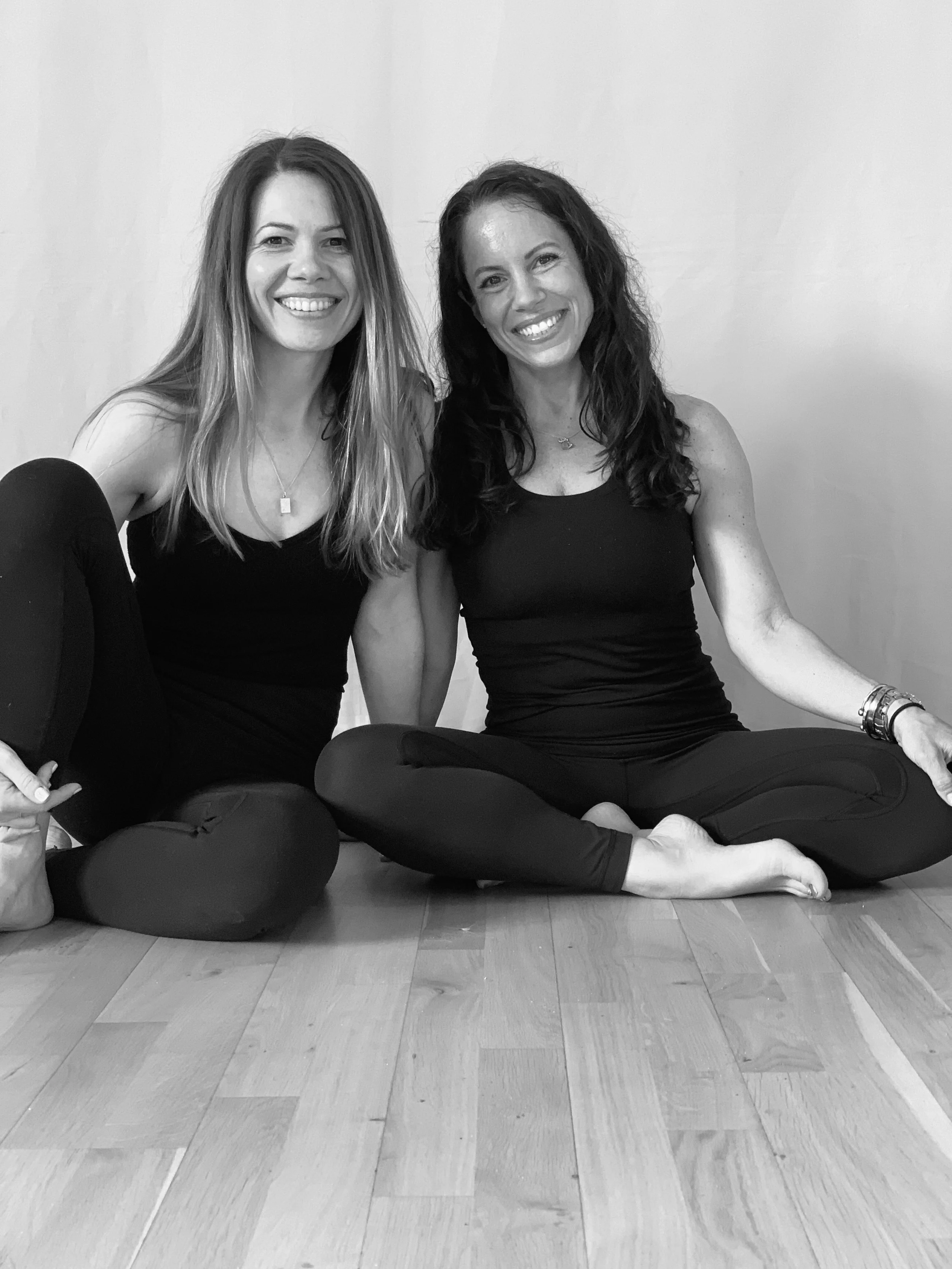
Sarah Williams & Anna Sugarman
Decades of combined experience in yoga teaching and teacher education, brought together through two distinct perspectives and a shared passion for developing great teachers.
What does it actually mean to be an advanced yoga teacher?
Advanced doesn't necessarily mean being able to demonstrate a more complicated asana.
It doesn't mean knowing more Sanskrit, having a bigger repertoire of poses or being able to create increasingly elaborate sequences.
For us, becoming an advanced teacher means developing greater understanding and discernment.
It means being able to look at a practice and ask:
Why am I teaching this?
Who is it appropriate for?
What am I actually asking this person's body to do?
What evidence or experience informs my approach?
When should I adapt it — and when should I leave it alone?
How can I communicate it clearly?
And perhaps most importantly:
How can I continue learning without becoming attached to having all the answers?
This training is about developing that kind of thinking.
A deeper education for teachers who want to keep questioning
The 300-hour training brings together traditional yoga philosophy and contemporary approaches to anatomy, movement, neuroscience, breath, pain and teaching methodology.
But we aren't interested in simply putting old ideas and new science into separate boxes.
Instead, we'll investigate where different perspectives meet — and where they don't.
You'll be encouraged to question assumptions, examine the language we use around yoga and the body, and develop the ability to distinguish between what we know, what we believe and what we simply repeat because we've heard it before.
Because the more experience you gain as a teacher, the more important that distinction becomes.
What we'll explore
Across the training, we'll explore the physical, philosophical and practical dimensions of teaching yoga.
Anatomy, biomechanics & functional movement
Develop a more nuanced understanding of how bodies move and why there is no single "correct" way for every body to perform a posture.
We'll look at movement variability, individual anatomy, load, mobility, stability and the practical application of anatomy to teaching.
Neuroscience & the nervous system
Explore what contemporary neuroscience can — and can't — tell us about yoga, stress, regulation, attention and human behaviour.
Rather than turning nervous-system language into another set of yoga buzzwords, we'll examine how this knowledge can genuinely inform the way we teach.
Breath & pranayama
Investigate the physiology and experience of breath alongside traditional pranayama practices.
You'll develop a more sophisticated understanding of how breath practices may influence the body and mind, while considering when, how and for whom different approaches may be appropriate.
Yoga philosophy
Go beyond learning philosophical concepts for the sake of knowing them.
We'll explore the historical and philosophical foundations of yoga and consider what these ideas might mean for a modern teacher — and where interpretation, translation and context matter.
Advanced asana & progressive sequencing
Develop greater skill in constructing practices that have purpose rather than simply looking impressive.
We'll explore sequencing, transitions, intention, pacing, language and adaptation, while helping you develop a teaching style that feels genuinely your own.
Teaching, observation & communication
Teaching isn't simply knowing what to say.
It's noticing.
We'll develop your ability to observe students, give useful feedback, use language precisely and make adjustments to your teaching in real time.
You'll have opportunities to teach, receive feedback and refine your approach.
Rest, recovery & embodied practice
Explore practices that support down-regulation, recovery and rest, while questioning some of the assumptions that surround the modern language of "nervous-system regulation".
You'll experience these practices yourself before considering how to teach them responsibly.
Special populations & adapting yoga
Explore how yoga can be adapted for different bodies, circumstances and needs.
The aim isn't to turn you into a therapist, but to develop the knowledge, humility and practical skills required to recognise when a practice needs modifying — and when a student needs a different kind of professional support.
The business of teaching yoga
Being a good teacher and making a sustainable living aren't mutually exclusive.
We'll look at the realities of building a career in yoga, including communication, workshops, retreats, community, pricing, boundaries and developing work that reflects your strengths.
Integration, mentorship & your teaching voice
Ultimately, the goal isn't to finish the training knowing more things.
It's to integrate what you've learned.
To become more confident in your decisions, clearer in your communication and more comfortable developing your own approach.
Two teachers. Two perspectives.
This training is taught by Anna Sugarman and Sarah Williams, bringing different experiences, approaches and perspectives to the room.
We don't agree on everything — and that's part of the value.
Yoga education is richer when we're able to encounter different viewpoints, question our assumptions and develop our own considered position.
Anna brings her extensive experience in yoga education, movement, philosophy and teacher training.
Sarah brings a grounded, analytical approach to teaching, with a particular interest in anatomy, embodied practice, critical thinking and the practical realities of teaching real people.
Together, we want to create a training environment where curiosity is encouraged and nobody is expected to accept an idea simply because it has become established within the yoga world.
This training is for you if...
You've already completed a 200-hour yoga teacher training. Maybe you’re a brand new teacher and you’re keen to keep learning, or perhaps you’re an experienced teacher looking to upgrade your teaching..
You might be:
feeling ready to move beyond the foundations of your initial training
questioning some of the things you were taught
wanting to understand anatomy and movement more deeply
looking for greater confidence in your teaching decisions
struggling to find your own voice amongst the enormous amount of yoga content available
wanting more practical feedback on your teaching
interested in developing workshops, retreats or other ways of sharing yoga
looking for a community of experienced teachers who are still curious about learning
ready to challenge yourself intellectually as well as physically.
You don't need to arrive with everything figured out.
In fact, we'd rather you didn't.
This isn't about becoming the perfect yoga teacher.
There isn't one.
The more you teach, the more you realise that yoga is complicated, bodies are individual and context matters.
Sometimes the most useful thing a teacher can do is change their plan.
Sometimes it's to say, I don't know.
Sometimes it's to ask a better question.
And sometimes it's simply to pay closer attention.
We want you to leave this training with more knowledge, of course.
But also with better questions, better judgement and greater confidence in your ability to keep learning.
The training
October 2026 – May 2027
The programme takes place across 10 in-person weekends in Brighton, alongside a monthly online session.
In-person weekends
Saturday & Sunday
9:00am – 5:00pm
24–25 October 2026
14–15 November 2026
12–13 December 2026
9–10 January 2027
30–31 January 2027
20–21 February 2027
13–14 March 2027
3–4 April 2027
24–25 April 2027
15–16 May 2027
Monthly online sessions
Tuesday evenings
7:30–9:00pm
The combination of in-person teaching, independent practice and online sessions gives you space to absorb the material rather than trying to compress 300 hours of education into one intensive block.
Your investment
Early Bird: £3,495
Available until 1 September 2026.
Full price: £3,995
Payment plans are available.
A £500 non-refundable deposit secures your place.
Your 300-hour training should be more than another certificate.
It should change the way you think about teaching.
It should make you more curious, not more certain.
More observant, not more prescriptive.
More capable of adapting, questioning and responding to the person actually standing in front of you.
And ultimately, it should help you become a teacher who doesn't simply know what to teach, but understands why.
Applications are now open for October 2026.

Join us to evolve your teaching
Deepen your knowledge. Challenge your thinking. Develop your own voice.